
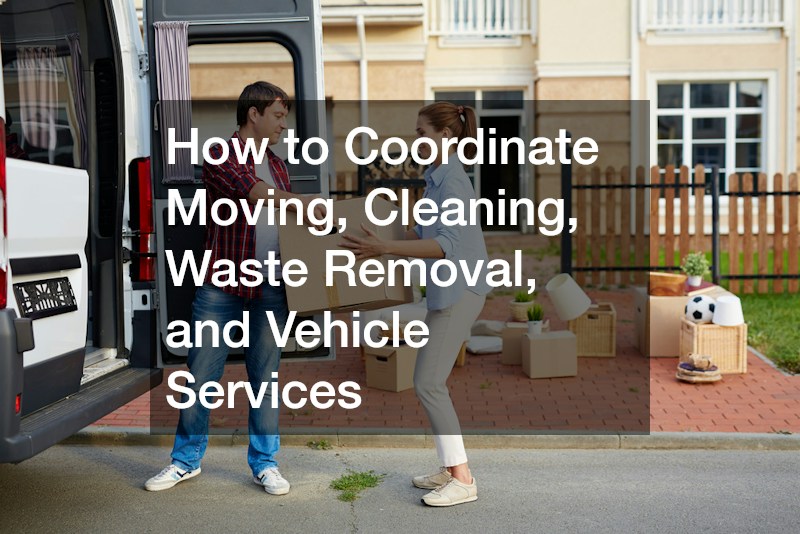
A well-organized move depends on more than packing boxes and choosing a new address. Families and businesses often need to coordinate transportation, cleaning, waste removal, vehicle maintenance, deliveries, and temporary services within the same short window. When these tasks are handled separately without a clear schedule, delays can quickly create unnecessary stress. A better approach is to map out each service in advance, identify which jobs depend on others, and build enough flexibility into the schedule for unexpected changes.
The most efficient moving plans usually start several weeks before the actual move. This gives people time to compare providers, prepare the property, remove unwanted items, clean carpets and rugs, and make sure vehicles are ready for travel. It also helps prevent situations in which one crew arrives before another has finished. Coordinating everything from moving services to waste pickup and roadside support can make the entire transition feel more manageable. With a thoughtful timeline and clear communication, homeowners, renters, and business owners can keep moving day organized while reducing disruptions at both the old and new locations.
Build a Detailed Moving Timeline
The first step in coordinating multiple services is creating a timeline that shows what needs to happen and when. Begin with the move date, then work backward to assign deadlines for packing, cleaning, junk removal, vehicle maintenance, and deliveries. A written calendar can help everyone understand which tasks must be completed before others can begin.
Booking moving services early is especially important during busy seasons, weekends, and the end of the month. Availability can become limited, and waiting too long may force you to adjust your preferred schedule. Once a moving company is selected, confirm arrival times, access instructions, parking requirements, and any items that require special handling.
A local mover may also be helpful for shorter relocations or moves involving multiple trips between nearby properties. Local crews may be familiar with common traffic patterns, neighborhood access restrictions, and building requirements that affect scheduling. Regardless of distance, provide the moving team with accurate information about stairs, elevators, large furniture, and loading areas.
Your timeline should include buffer periods between major tasks. For example, schedule junk removal before deep cleaning so cleaners are not working around discarded furniture or debris. Likewise, avoid scheduling carpet work while movers are still carrying items through the home. A few hours of separation between services can prevent delays and make each job easier to complete.

Schedule Cleaning After Heavy Activity
Cleaning is most effective after furniture, boxes, and unwanted materials have been removed. Empty rooms allow cleaners to reach corners, baseboards, floors, and other areas that are normally obstructed. Scheduling these services near the end of the move can help leave the old property in better condition and make the new location more comfortable.
Rug cleaning may be especially useful before transporting area rugs to a new home. Cleaning them beforehand prevents dust, pet hair, odors, and other debris from being carried into the new space. Once cleaned, rugs should be completely dry before they are rolled or packed to reduce the risk of moisture problems during transportation.
A carpet cleaning company can address wall-to-wall carpeting after furniture is removed. High-traffic areas often reveal stains or discoloration that were hidden under sofas, beds, or tables. Cleaning after the move-out process also gives carpets time to dry without people repeatedly walking across them.
At the new property, homeowners may choose to clean before the movers arrive instead. This can be especially convenient when the home is vacant. Floors, cabinets, bathrooms, and storage areas are easier to clean before boxes fill the rooms. Coordinating cleaning with the moving schedule ensures that crews are not competing for the same space and helps prevent freshly cleaned surfaces from being immediately soiled.
Coordinate Deliveries With Moving Crews
Moves often involve more than transferring existing belongings. New furniture, appliances, building supplies, office equipment, or storage containers may also need to arrive around the same time. Without coordination, delivery vehicles and moving trucks can block each other or create congestion around the property.
A truck delivery service should receive clear instructions about the address, unloading area, gate codes, loading docks, and any restrictions on vehicle size. If the delivery includes large or heavy items, confirm whether the driver will unload them or whether additional labor is required. Never assume that a delivery includes setup or placement inside the building.
Try to stagger delivery windows so large vehicles do not arrive simultaneously. Movers should generally have enough access to unload household belongings without another truck occupying the driveway or loading zone. For apartment buildings or commercial spaces, reserve elevators and loading areas if the property requires advance scheduling.
It can also help to prioritize essential deliveries. Beds, refrigerators, work equipment, and other immediately needed items may deserve earlier time slots, while decorative pieces can arrive later. Keep contact information for drivers and service providers available throughout the day so schedule changes can be communicated quickly.
A simple written schedule with arrival windows, provider names, and phone numbers can help one person oversee the process without constantly searching through emails or text messages.

Remove Unwanted Items Before Packing
Moving is an ideal time to decide what is worth transporting and what should be discarded, donated, recycled, or sold. Reducing the amount of material before packing can lower the number of boxes needed and make the new property easier to organize.
For large cleanouts, a local dumpster rental can provide a central place for approved household debris, damaged furniture, renovation waste, and other unwanted materials. Before renting a container, ask about prohibited items, weight limits, placement requirements, and pickup procedures. The container should be positioned where it will not block moving trucks, delivery vehicles, or neighbors.
Garbage collection services may be more practical for smaller amounts of routine household waste. Confirm collection days and any rules regarding oversized items, extra bags, or special pickups. If the move happens near a scheduled collection day, placing eligible waste out on time can reduce the amount left behind.
Start decluttering well before packing begins. Work through storage rooms, garages, closets, basements, and sheds one area at a time. Separating items into clear categories prevents usable belongings from being accidentally thrown away.
Hazardous materials require special attention. Paint, automotive fluids, chemicals, batteries, and certain electronics may not be accepted in ordinary trash or dumpsters. Check local disposal requirements instead of leaving these materials for movers or property owners to handle later.
Plan Temporary Facilities for Larger Moves
Some moves involve long workdays, outdoor crews, property renovations, or locations where indoor facilities are unavailable. In these situations, temporary amenities can make the site more practical for everyone working there.
A local portable toilet rental may be useful during large residential moves, commercial relocations, construction-related transitions, or cleanouts where plumbing has been disconnected. Temporary restrooms can also reduce unnecessary traffic through areas that have already been cleaned or are undergoing renovation.
When arranging a unit, consider how many people will be on site and how long the project is expected to last. Placement should allow service vehicles to access the unit while keeping it away from loading zones, driveways, and pathways used by movers. Stable, level ground is important, and the location should not interfere with neighbors or public sidewalks.
Larger projects may require more than one unit or additional servicing. Discuss the expected number of users with the rental provider so they can recommend an appropriate setup. Handwashing stations or sanitizer options may also be available.
Temporary facilities should be scheduled to arrive before crews begin working and removed after major activity has ended. Including these arrangements in the overall moving calendar prevents last-minute problems and helps keep work areas more organized.

Prepare Personal Vehicles for the Move
Personal vehicles often play a major role in moving day, even when professional movers handle most belongings. Cars may be used to transport family members, pets, important documents, valuables, cleaning supplies, or fragile items that owners prefer to keep with them.
Scheduling oil change services before a long-distance move can help ensure that routine maintenance is addressed before travel begins. Drivers should also check tire pressure, fluid levels, lights, brakes, and windshield wipers. If the vehicle is due for other maintenance, completing it ahead of the move may reduce the chance of a preventable problem on the road.
Avoid overloading personal vehicles with boxes or furniture. Excess weight can affect handling, braking, and visibility. Keep rear windows and mirrors clear, and secure loose items so they do not shift during sudden stops.
Prepare a small travel kit containing water, phone chargers, basic tools, important medications, snacks, and paperwork related to the move. If children or pets are traveling, keep their essentials accessible instead of packing them in the moving truck.
Drivers should also plan fuel stops and rest breaks for longer trips. Knowing the route in advance can help identify construction zones, tolls, or areas where large moving vehicles may encounter restrictions.
Prepare for Roadside Problems
Even well-maintained vehicles can experience unexpected mechanical problems, flat tires, accidents, or dead batteries. Because moving days already involve tight schedules, having a roadside plan can prevent a vehicle problem from creating unnecessary confusion.
Save the number of a 24 hour towing company before travel begins, particularly for long-distance moves or trips through unfamiliar areas. Having contact information ready is easier than searching for help on the roadside while dealing with a disabled vehicle.
Drivers should also confirm what roadside assistance is included through insurance policies, vehicle warranties, memberships, or credit card benefits. Coverage may include towing, battery assistance, lockout service, fuel delivery, or tire changes. Knowing these details beforehand can prevent duplicate expenses.
Keep important documents in the vehicle, including registration, insurance information, identification, and emergency contacts. A flashlight, reflective warning devices, portable battery charger, and basic first-aid kit can also be useful during roadside delays.
If a breakdown occurs while traveling with a moving truck or caravan, decide in advance how the group will communicate. One person may need to stay with the disabled vehicle while others continue to the destination. Clear plans make it easier to adjust arrival times for movers, cleaners, and delivery crews when travel does not go as expected.

Keep Communication Centralized
The final piece of coordinating a complicated move is communication. With several providers working on different tasks, information can easily become scattered across emails, phone calls, texts, and paper contracts. Creating one central record helps reduce mistakes.
Keep a list of every provider, contact person, phone number, arrival window, payment requirement, and confirmation number. Include moving services, cleaning crews, delivery companies, waste providers, vehicle appointments, and temporary rentals. A digital spreadsheet or shared note can make this information accessible to multiple household members.
Assign one person to act as the primary contact whenever possible. Providers should know who can answer questions, approve changes, and give access to the property. This reduces conflicting instructions and helps crews keep moving.
Confirm appointments several days before the move, then review the schedule again the night before. Ask providers to notify you of delays as soon as possible. If one service shifts, contact any later providers whose access may be affected.
After each task is completed, mark it off and save receipts or documentation in one place. Taking photos of cleaned rooms, removed waste, delivered items, and the condition of the property can also be helpful.
Before moving day, walk through both properties with the schedule in hand and note any access concerns that could affect service providers. Confirm parking areas, doorways, elevators, utility availability, and spaces reserved for deliveries. Sharing these details early can help crews arrive prepared and reduce avoidable interruptions during an already busy transition.
A coordinated move does not require every detail to happen perfectly. It requires a plan that keeps services from interfering with one another and gives everyone enough information to adjust when circumstances change. By organizing movers, cleaners, deliveries, waste removal, temporary facilities, vehicle maintenance, and roadside support around one shared timeline, households can reduce confusion and make the transition from one property to another far more manageable.